
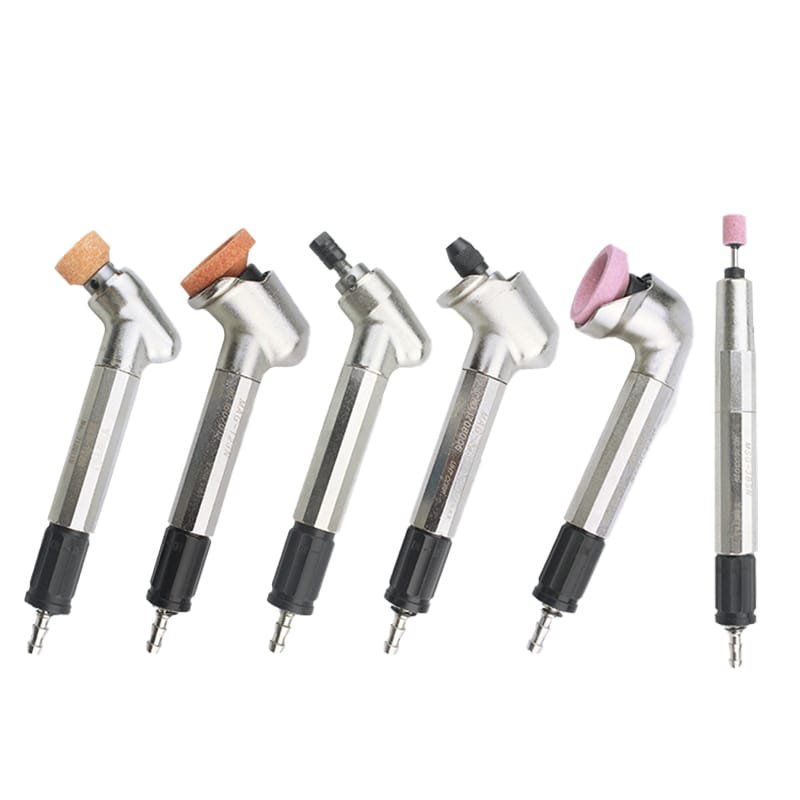
Pneumatic Tools: Power and Precision in Compressed Air
In the world of industrial and DIY applications, pneumatic tools have carved out a significant niche. These tools, powered by compressed air, offer a unique combination of power, efficiency, and versatility that makes them a preferred choice in various fields.
How Pneumatic Tools Work
At the heart of pneumatic tools is the principle of converting the energy of compressed air into mechanical motion. Compressed air is typically generated by an air compressor, which stores air at high pressure in a tank. When the tool is activated, the compressed air is released from the tank and directed into the tool through a hose. Inside the tool, the air acts upon a piston, vane, or turbine, causing it to move. This mechanical motion is then transferred to the working part of the tool, such as a drill bit, a hammer, or a sander, enabling it to perform its intended function.
Advantages of Pneumatic Tools
High Power – to – Weight Ratio
One of the most notable advantages of pneumatic tools is their high power – to – weight ratio. They can deliver a substantial amount of power while remaining relatively lightweight. For example, a pneumatic impact wrench can generate enough torque to loosen stubborn bolts, yet it is easy to handle due to its light construction. This makes them ideal for applications where portability and ease of use are crucial, such as in automotive repair shops where mechanics need to move around the vehicle with the tool.
Safety
Pneumatic tools are generally considered safer to use compared to their electrical counterparts. Since they operate on compressed air, there is no risk of electric shock. This is especially important in environments where water or moisture is present, such as in construction sites or marine applications. Additionally, many pneumatic tools are designed with safety features like automatic shut – off valves, which prevent over – pressurization and potential accidents.
Durability
These tools are built to withstand harsh working conditions. The internal components of pneumatic tools are less likely to overheat, as the compressed air used for operation also helps in cooling the tool. This, combined with their robust construction, makes them highly durable. For instance, in a manufacturing plant where tools are used continuously for long hours, pneumatic grinders can maintain their performance over an extended period, reducing the need for frequent replacements.
Cost – Effectiveness
Over time, pneumatic tools can be cost – effective. Although the initial investment in an air compressor and the tools themselves may seem significant, the cost of maintenance and operation is relatively low. Compressed air is a clean and inexpensive power source, and pneumatic tools generally have fewer moving parts compared to electric tools, which means less wear and tear and lower repair costs.
Common Types of Pneumatic Tools
Pneumatic Drills
Pneumatic drills are widely used in construction, woodworking, and metalworking. They can drill holes in various materials with high precision. Some pneumatic drills are designed for heavy – duty applications, capable of drilling large – diameter holes in concrete or steel, while others are more suitable for delicate tasks like drilling small holes in jewelry or electronic components.
Impact Wrenches
Impact wrenches are essential in automotive and mechanical repair. They use a combination of rotational force and impact blows to quickly tighten or loosen nuts and bolts. This makes them much faster and more efficient than traditional wrenches. In a busy auto repair shop, a pneumatic impact wrench can change a tire in a fraction of the time it would take using a manual wrench.
Pneumatic Sanders
There are different types of pneumatic sanders, such as orbital sanders and belt sanders. Orbital sanders are great for achieving a smooth finish on surfaces, whether it’s wood, metal, or plastic. Belt sanders, on the other hand, are more suitable for removing large amounts of material quickly. They are commonly used in furniture manufacturing, where rough – cut lumber needs to be shaped and smoothed.
Pneumatic Spray Guns
Pneumatic spray guns are widely used in painting applications. They atomize paint into fine particles, allowing for an even and smooth coating. This results in a professional – looking finish and is used in industries such as automotive painting, furniture finishing, and industrial coatings.
Applications of Pneumatic Tools
Construction Industry
In construction, pneumatic tools are used for a wide range of tasks. Pneumatic hammers are used to break up concrete, while nail guns and staplers are used for fastening materials like wood and drywall. Pneumatic drills and impact wrenches are essential for installing fixtures and assembling structures.
Manufacturing
Manufacturing plants rely on pneumatic tools for various operations. Pneumatic screwdrivers are used for precise assembly work, ensuring that screws are tightened to the correct torque. Pneumatic grinders and sanders are used to shape and finish parts made of metal, plastic, or composite materials.
Automotive Repair
Automotive repair shops use pneumatic tools extensively. Impact wrenches for wheel removal, pneumatic lifts for raising vehicles, and pneumatic spray guns for painting are just some of the examples. Pneumatic tools help mechanics work more efficiently, reducing the time it takes to service a vehicle.
In conclusion, pneumatic tools are an integral part of modern industrial and DIY work. Their power, safety, durability, and cost – effectiveness make them a valuable asset in a wide range of applications. As technology continues to advance, pneumatic tools are likely to become even more efficient and versatile, further enhancing their role in various industries.
